Supercompensation — def. (in the context of exercise and fitness): when a system of the body is put through a crisis state, commonly through physical activity or working out, and then allowed to restore itself through its natural regenerative processes. The stress/recovery process results in what is termed the training effect.
These adaptive mechanisms result in a process known as supercompensation, whereby your body overcompensates and ends up at a higher fitness level than before the stress of training was applied — an increase in your capability as a result. The small increase in fitness facilitated by the stress and recovery is called supercompensation.
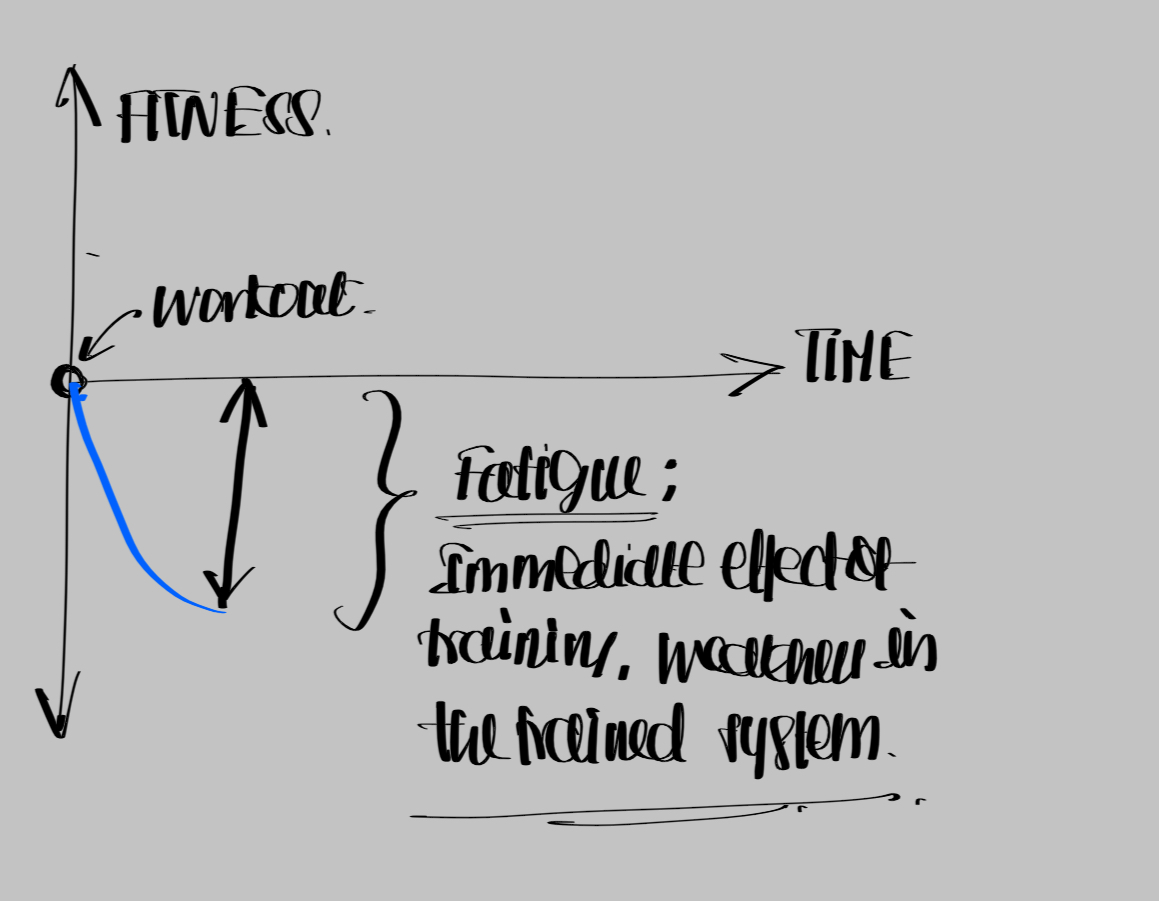
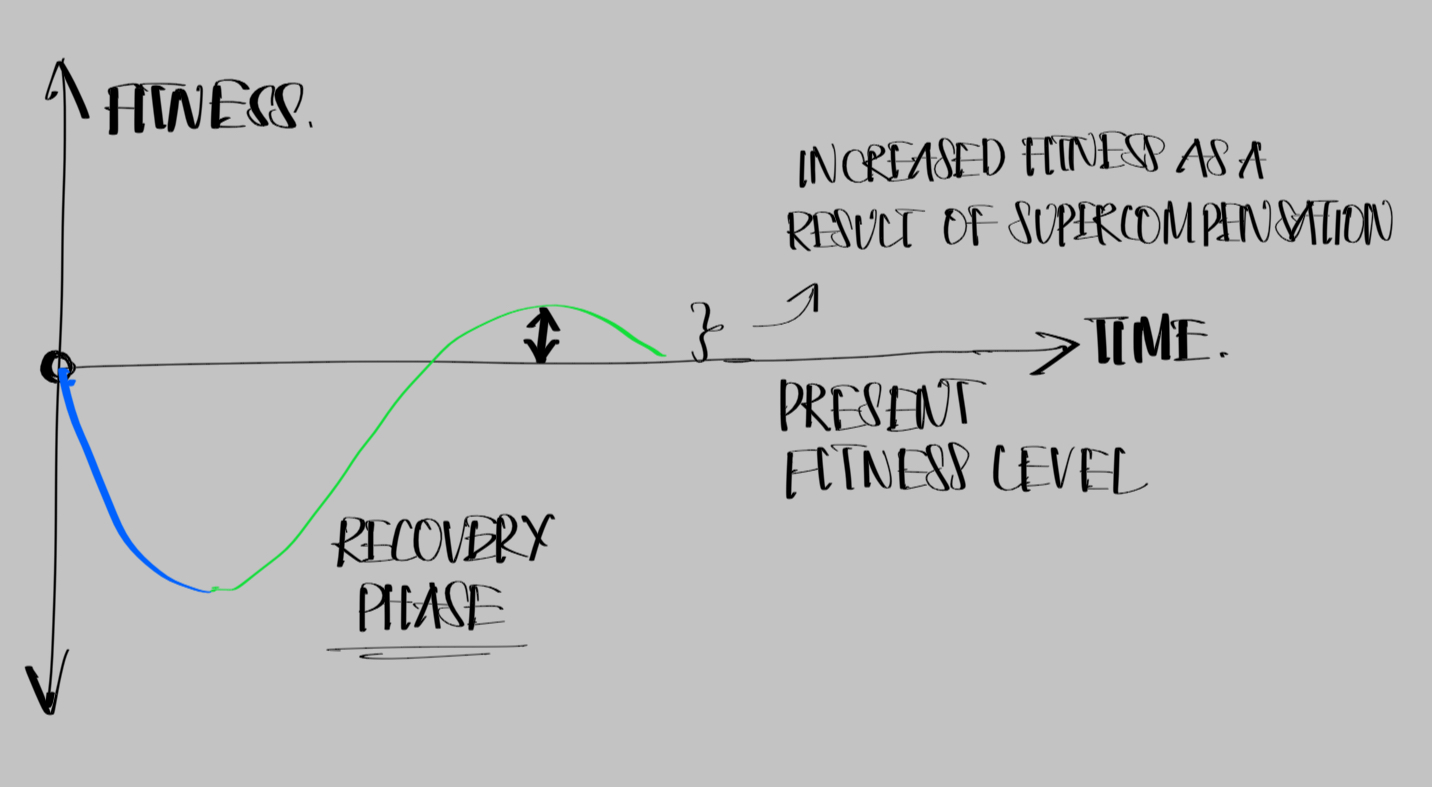
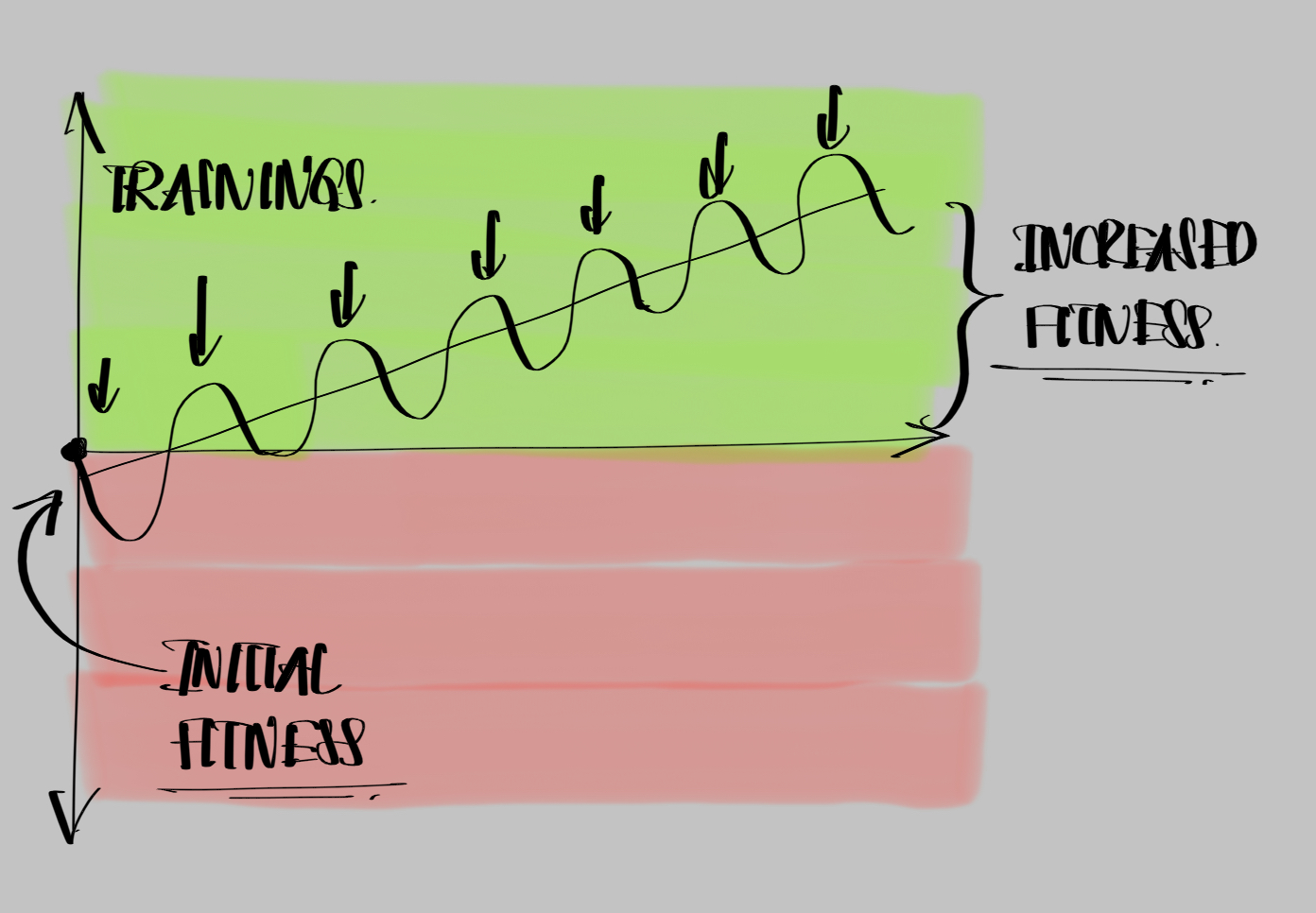
And keep doing that consistently over time and you have an improved performance — the basics of any structured training system.
A Recipe for Antifragility
The author Nassim Taleb defined the beautiful concept of antifragility — things that gain from stress, disorder, and uncertainty rather than weaken or just break.
He goes on to explain how almost all natural processes that have successfully changed through time — ideas, recipes, vaccines and bacterial resistance, political ideas, human evolution, the rise of cities, culture, equatorial forests, and more — have at their center the property of antifragility.
Supercompensation as a voluntary training mechanism over time can be viewed as a recipe for antifragility: to become stronger by applying stress to a system. The basic idea is that the more stress and training you undergo, the stronger you become — provided you recover properly through the right nutrition and enough rest. It's a scientific explanation for the age-old quote:
"The more you sweat in training, the less you bleed in battle."
The voluntary, incremental taking on of adversity becomes the way to progress.
"What stands in the way becomes the way." — Marcus Aurelius
Intellectual Supercompensation
As Nassim Taleb observed the principle across domains, Naval corroborated it for the intellectual domain when he observed:
"Knowledge workers function like athletes — train and sprint, then rest and reassess." — Naval Ravikant
Although rest equates to different concepts in the intellectual realm, rest and recovery for a lot of prolific mathematicians is music and musical instruments. We've been able to scientifically show that using one part of the brain intensely for a while, then switching to other parts, benefits both the focused and diffuse brain networks. Spending time in nature plays an important role too — and, before all other forms of rest in every domain, enough sleep reigns supreme.2
Another example of intellectual application is improving memory — greatly achieved through spaced repetition: reading something, resting, and reading the same material again at increasingly spaced intervals.3
"Naps are steroids for the brain."
This is the basic principle of supercompensation — rest allows the body's natural regenerative processes to compensate, accommodate new thinking patterns, and let new ideas take shape.
Philosophical Underpinnings
The concept of supercompensation is reflected in philosophy through the idea of voluntarily taking on increasingly difficult challenges — an echo of the Hero's Journey, as described by Joseph Campbell.
Jordan Peterson offers an antidote to the difficulties of life along the same lines:
"Keep taking on more and more responsibility, and you will become someone capable of more." — Jordan Peterson
To be an eternal explorer of life.
Common Pitfalls: Taking Shortcuts
The most common obstacle to achieving supercompensation is short-term thinking — trying to bypass the process by doing too much, too soon.
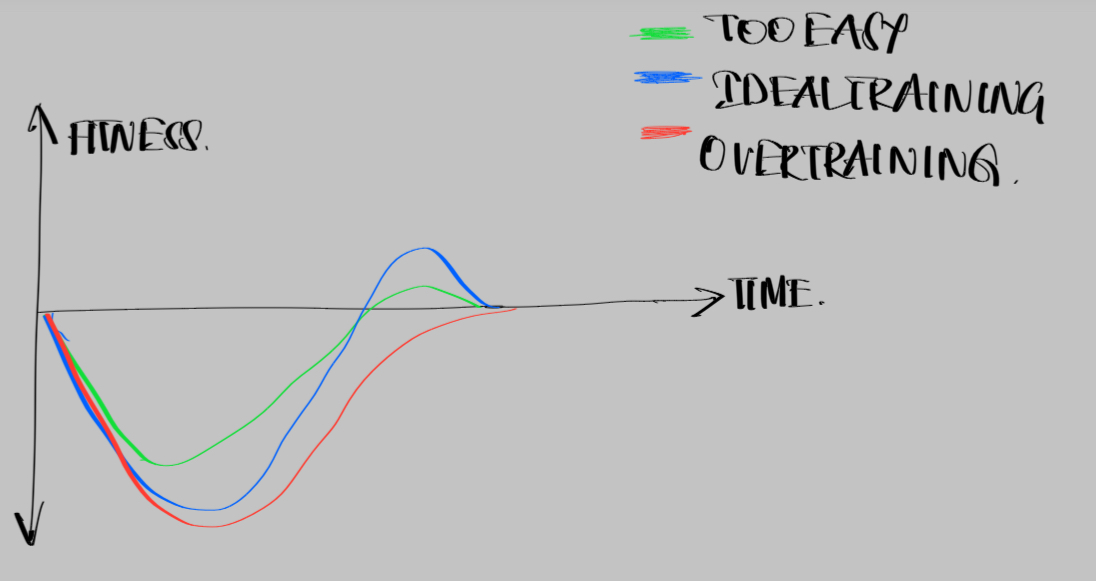
The most common reason for early termination of athletic careers is overuse injury — training too much without enough rest and nutrition to facilitate the body's natural supercompensation. A common statistic: 70% of all runners get an overuse injury every year.
A stressed-out person is also less likely to find the best possible solution within the wider context. As Leonardo da Vinci prescribed for overcoming creative blocks:
"Step away from the canvas."
If you're stuck in a creative rut, his suggestion was to take a walk alone — better still, in nature — and return to the canvas. You will most likely have the solution, or at the very least an idea of the next steps.